


Do You Need a Root Canal? Signs, Recovery, and What to Expect
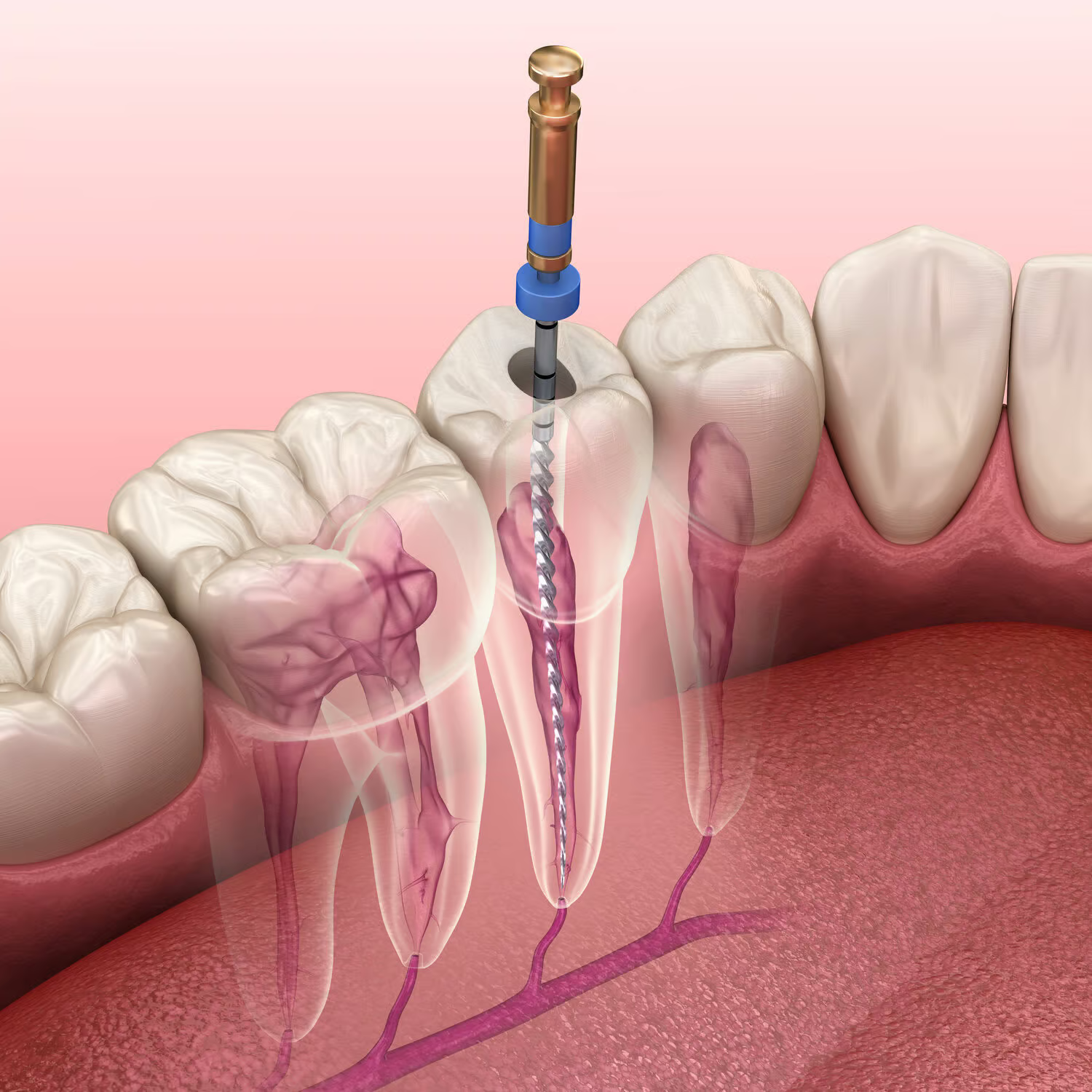
A root canal becomes necessary when bacteria reach the pulp — the soft tissue at the center of a tooth — usually through deep decay, a crack, or trauma, and the most reliable signs are persistent pain, sensitivity that lingers well after hot or cold contact, and swelling near the affected tooth. Despite the procedure's reputation, modern root canal therapy is designed to relieve pain rather than cause it, and most patients report it feels similar to getting a routine filling. At Clear Smile Dental Care, Dr. Tony Hong and Dr. Roxana Ghaderi perform root canal therapy specifically to save a natural tooth that would otherwise need to be extracted.
Here's how to recognize the warning signs, what the procedure actually involves, and what recovery realistically looks like.
What Are the Warning Signs You May Need a Root Canal?
Tooth pain has a lot of possible causes, but certain patterns point specifically toward infection inside the tooth:
- Pain that lingers well after hot or cold food or drink, rather than fading within a few seconds
- Pain when biting or chewing, especially on one particular tooth
- Spontaneous pain that shows up without any obvious trigger, sometimes waking you up at night
- Swelling or a small bump on the gum near the affected tooth
- Darkening of the tooth, which can signal the nerve inside has died
- A tooth that suddenly stops hurting after a period of pain — counterintuitively, this can mean the nerve has died rather than healed
Any one of these on its own is worth a dental visit; several together are a stronger signal that the pulp is involved.
Why Does an Infected Tooth Need This Specific Treatment?
Once bacteria reach the pulp chamber, the tooth's immune response alone generally can't clear the infection — the pulp doesn't have the blood supply redundancy that other tissues do, so it either heals rarely on its own or the infection spreads further into the surrounding bone. Root canal therapy addresses this directly by removing the infected tissue, cleaning out the canal system, and sealing it to prevent reinfection, which allows the outer tooth structure — the part that actually does the biting and chewing — to be preserved rather than extracted.
What Actually Happens During the Procedure?
Root canal therapy follows a fairly consistent sequence, regardless of which tooth is involved:
- Numbing the area thoroughly with local anesthesia, the same as for a filling
- Accessing the pulp chamber through a small opening in the tooth
- Removing the infected or dead pulp tissue from inside the tooth and root canals
- Cleaning and shaping the canals to eliminate remaining bacteria
- Sealing the canals with a biocompatible filling material to prevent future infection
- Restoring the tooth, typically with a crown, to protect it against future fracture
Most root canals are completed in one to two appointments, depending on the tooth's anatomy and how advanced the infection is.
Is a Root Canal Actually Painful?
This is the most persistent misconception in dentistry, and it runs backward: a root canal is performed specifically to relieve the pain an infected tooth is already causing, not to create new pain. Local anesthesia numbs the area fully during treatment, and most patients describe the experience as comparable to having a cavity filled. Some mild soreness in the days following treatment is normal and typically responds well to over-the-counter pain relief.
What Does Recovery Actually Look Like?
Recovery from root canal therapy is usually straightforward:
- Mild tenderness around the tooth and gum for a few days, especially when biting directly on it
- Temporary sensitivity to pressure, which fades as inflammation settles
- Normal eating on the opposite side of your mouth is fine right away; chewing on the treated tooth is best avoided until any crown is placed
- Over-the-counter pain relief (like ibuprofen) is typically enough to manage any lingering discomfort
- Full comfort generally returns within a few days to about a week
If pain is worsening rather than improving, or you notice new swelling, that's worth a call rather than waiting it out.
Why Does the Tooth Usually Need a Crown Afterward?
Removing the pulp also removes the tooth's internal blood supply, which over time makes the remaining structure more brittle and prone to cracking under normal biting force — particularly for back teeth that absorb the most chewing pressure. A dental crown placed after root canal therapy reinforces the tooth from the outside, protecting it from fracture and extending its functional lifespan considerably. Skipping this step is one of the more common reasons a successfully treated tooth is later lost to a crack.
What Happens If You Delay Treatment?
An infected tooth doesn't resolve on its own, and waiting typically allows the infection to spread into the surrounding bone, which can lead to a bone abscess, more significant pain, and in some cases loss of the tooth entirely. At that point, options narrow to extraction followed by a replacement such as a dental implant or bridge — both viable, but neither preserves your original tooth the way earlier treatment can.
The Bottom Line for Highlands Ranch Patients
Persistent tooth pain, lingering sensitivity, or swelling near a tooth are worth taking seriously rather than waiting out — they're the clearest early signals that a root canal may be needed, and catching the problem early keeps your treatment and recovery simpler. The procedure itself is designed to relieve pain, not cause it, and for most patients, recovery is a matter of days, not weeks.
Schedule Root Canal Care in Highlands Ranch
Dr. Tony Hong and Dr. Roxana Ghaderi provide root canal therapy at Clear Smile Dental Care, designed to relieve pain and preserve your natural tooth whenever possible. For dental pain that can't wait, our team also offers same-day emergency appointments. We proudly serve patients throughout Highlands Ranch, Westridge, Lone Tree, Littleton, and Centennial.
If you're dealing with persistent tooth pain, call (303) 770-8278 to schedule an evaluation.
Schedule Your Visit
Whether you’re due for a routine checkup or exploring treatment options, Clear Smile Dental Care offers personalized care for every stage of your smile.
Schedule your visit with our team today.